Karl Vilhelmsson Emneby
Karl Vilhelmsson Emneby
Research intern at CHAI.B.A. Physics, with Distinction, UC Berkeley, GPA 3.910.
karlcal@berkeley.edu · cv · github · linkedin · twitter
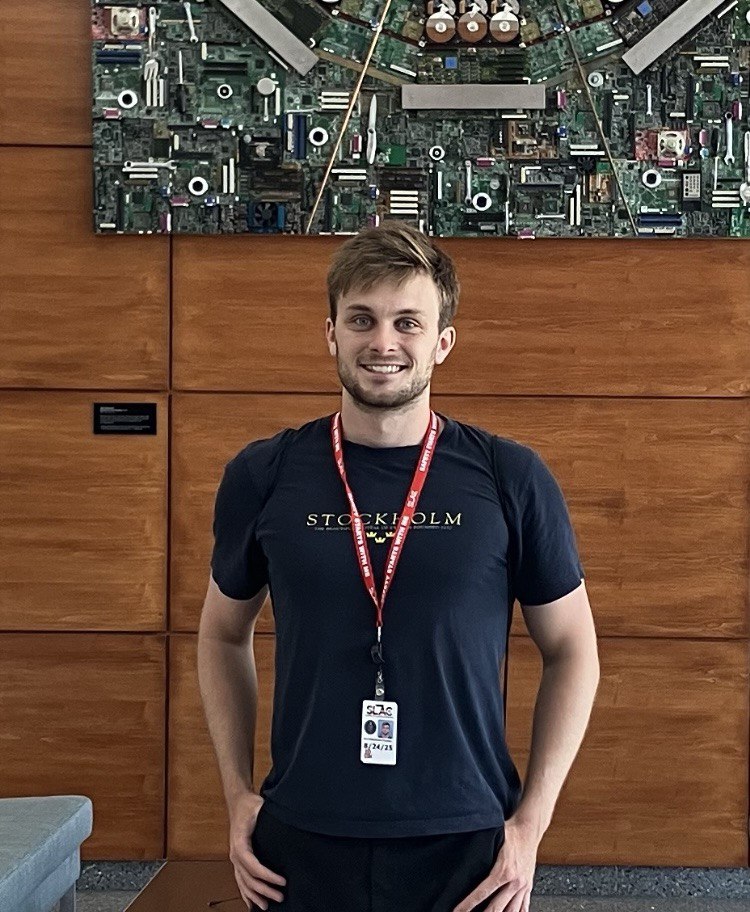
Research intern at CHAI (Center for Human-Compatible AI) under Julian Yocum, a PhD student of Stuart Russell.
Jul–Oct 2026Pretty Linear Liars. K. Vilhelmsson Emneby, J. Yocum, C. Allen. Accepted, NeurIPS 2026 InterpScience Workshop. First interpretability paper to give a causal reason to regularize regression probes. Predictions confirmed in a toy transformer and in Llama-2-7B.
Sept 2026CHAI / BAIR. Interpretability with Cam Allen and Julian Yocum. Earlier work on measurement validity: is a decodable feature one the network actually computed? A comparison of the Ising model and HMMs. Blog post late Sept. or early Oct. 2026.
2025–2026SLAC National Accelerator Laboratory. Neutrino Group, under Prof. Hirohisa Tanaka. Used latent spaces to investigate the low-energy excess of electron neutrinos detected in MiniBooNE.
2025Mu2e. Berkeley Physics, under Prof. Yury Kolomensky. Bayesian analysis in Julia for a forbidden muon-to-positron decay, plus detector hardware for Fermilab.
2023–2025I wanted to experience “real life”, so I went all in and took half a year to work as a trash man. Then I went to South America for half a year. Things like the deadly fear I felt when running from wild dogs in the desert gave me clarity on what matters in life.
2021–2022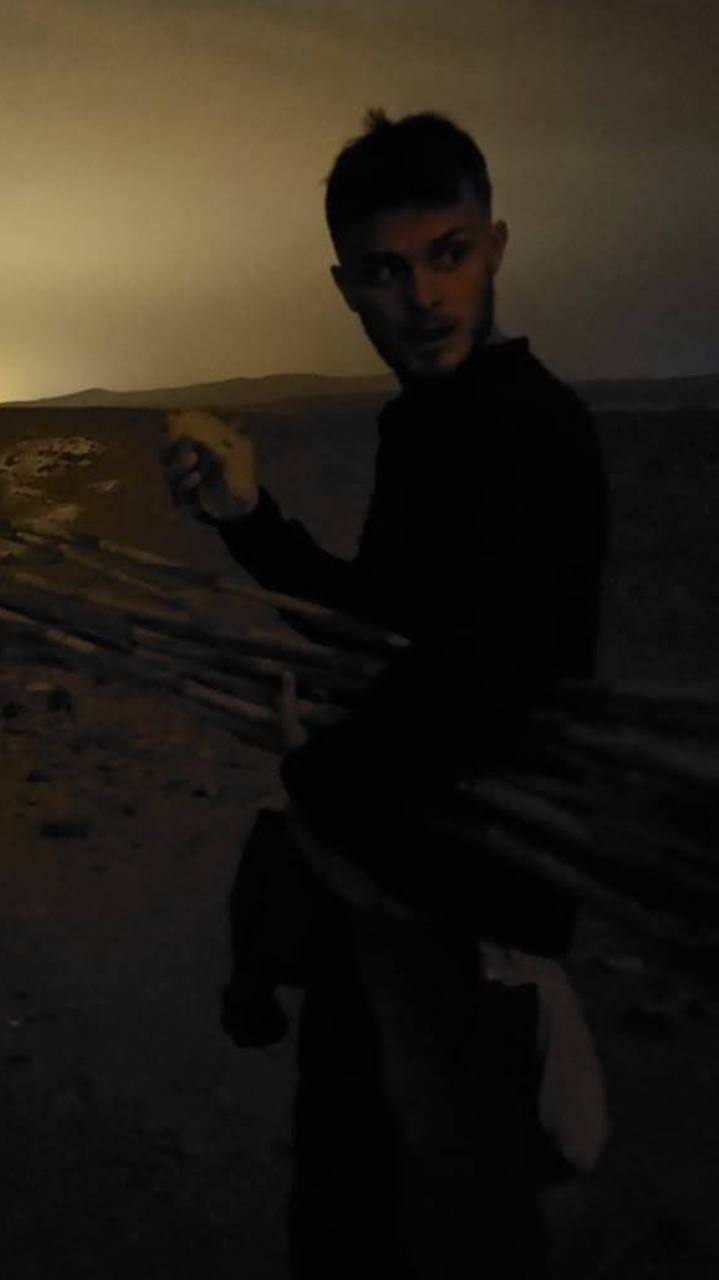
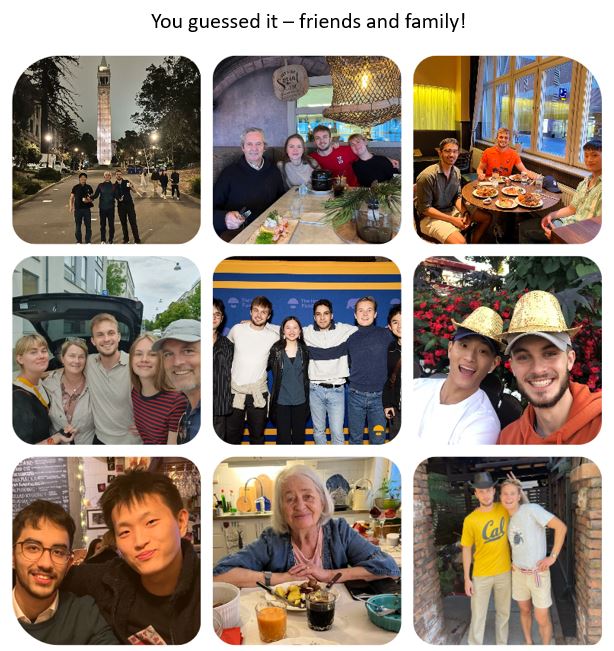
Languages. I love language and spend more than half of my time speaking languages other than English: Chinese (here's proof), Spanish, Swedish/Norwegian, Italian.
Mentions. Acknowledged in the blog post Adaptive Parallel Reasoning (Xie & Lian, 2026).
2026Books. Apart from family and friends, my values have been influenced greatly by Marcus Aurelius's Meditations, Confucius's Lunyu (论语), Yuval Noah Harari's Sapiens, and, honestly, Avatar the Last Airbender. The most transformative read of my life was Joanne Baker's 50 Physics Ideas You Really Need to Know.